
Clayton County Directory Collections
The historical shelf is a set of leads, not one continuous Clayton County city directory series. A 1960 Forest Park volume appears in an established genealogy catalog. Regional telephone books from 1968 and 1970 give leads for Ellenwood and Conley. Federal census schedules and courthouse records may carry an older trail farther. Staff should confirm each title, publisher, format, and access term before a visit.
| Collection | Years | Where Held | Access |
|---|---|---|---|
| Forest Park directory lead | 1960 | Genealogy catalog; local copy unverified | Confirm repository |
| Atlanta-area telephone books | 1968 and 1970 leads | Library of Congress regional reels | Search exchange and place |
| Federal population census | 1860-1950 public | NARA and genealogy databases | 72-year release rule |
| Georgia city directories | Clayton runs not itemized | UGA MAGIL, Hargrett, DLG | Search place and publisher |
| County records | 1858 forward in principle | Courthouse and Georgia Archives | Series survival varies |
No current official catalog found in the research gives a full Jonesboro, Morrow, Riverdale, Forest Park, or reverse-directory run. A missing catalog result does not prove that a volume never existed. The shelf, microfilm cabinet, and licensed databases still need checking.
Forest Park City Directory Lead
The verified 1960 Forest Park lead is the best fixed point for a twentieth-century Clayton County city directory search. It is one identified title, not proof of annual books on either side of that year. Search the surname, then inspect the street guide, publisher statement, abbreviation page, and suburban coverage note. Those pages show what the publisher canvassed.
Forest Park's postwar growth makes the volume useful for family moves, business ties, and a household's first appearance in a newer subdivision. If a name is absent, try initials, a spouse, alternate surname order, and the street. Rural residents and unlisted telephone customers may be missing, and the canvass may predate publication by months.
Clayton County Telephone Directories
The 1968 and 1970 Atlanta regional reels offer another route. Ellenwood and Conley are vital search terms because a book may follow an exchange or service area, not a county boundary. Both communities cross county contexts, so confirm any matching address with a parcel or other Clayton record.
A telephone directory identifies the subscriber, not every household member. Still, a number and address can connect a family between censuses, place a business near a home, or mark when a listing ends. Search nearby editions and record the full title printed on the reel.
Note: A telephone subscriber is evidence tied to one listing, not proof of every person who occupied the address.
Read Clayton County Directory Entries
A city directory entry packs several facts into one line. Exact marks change by publisher, so copy the key before decoding a page. No stable Clayton scan was found; these are documented Georgia conventions, not a claimed local transcription.
| Name | Surname, given name or initials, sometimes a title |
|---|---|
| Family | Spouse in parentheses or widow notation |
| Work | Occupation, employer, or owned business |
| Home | Street address, sometimes an owner or renter mark |
| Later books | Telephone number and street-order listing |
- Criss-cross directory
- A section arranged by street and house number rather than surname.
- Householder index
- A street-order list connecting an address to the named householder.
- Abbreviation key
- The publisher's legend for short forms such as h, r, and emp.
Some historical publications also state race or marital status. Read those labels as products of their publisher and period, and never infer what an entry does not say.
Clayton County Genealogy Room
An official 1997 repositories inventory described a Genealogy and Local History Room at library headquarters, 865 Battlecreek Road in Jonesboro. It listed county histories and genealogy material. Since that inventory is dated, call 770-473-3850 before relying on the room name, hours, microfilm, subscriptions, or a specific city directory.
Ask a bounded question. Request exact titles, publishers, and inclusive years for Jonesboro, Forest Park, Morrow, Riverdale, and reverse directories. Ask whether each item is shelved, filmed, or licensed online. A catalog number and a list of missing years are more useful than a broad claim that local history is available.
Clayton County Directory Catalogs
The UGA MAGIL city directory collection warns that publishers may have separate catalog records. Search each place and publisher. Older pre-1900 books may appear through Hargrett, while the Digital Library of Georgia adds newspapers, maps, and local-history material.
The UGA screen shows why title-level catalog work matters.
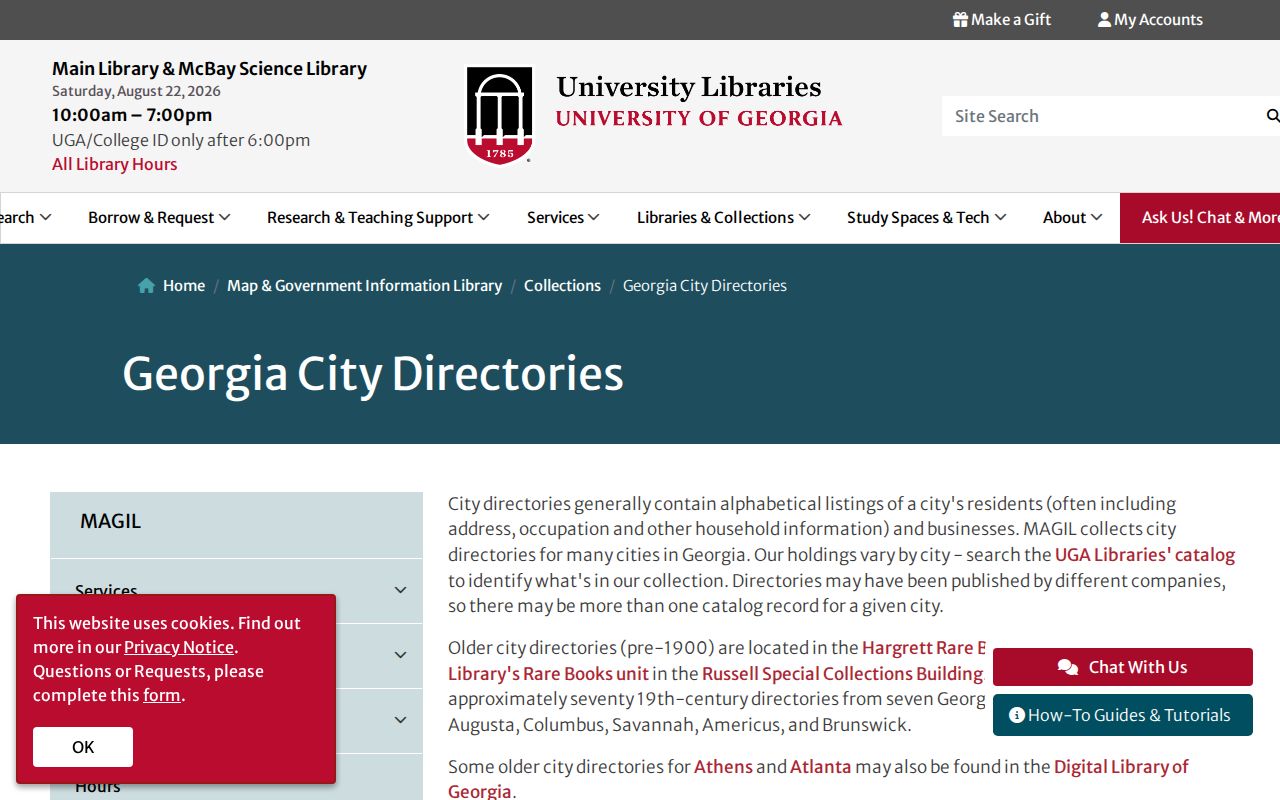
Use it to build a call list, then verify whether the item is online, onsite, or held elsewhere.
The Georgia Public Library Service digitization announcement covers 214 directories from 17 named communities, but it names no Clayton community.
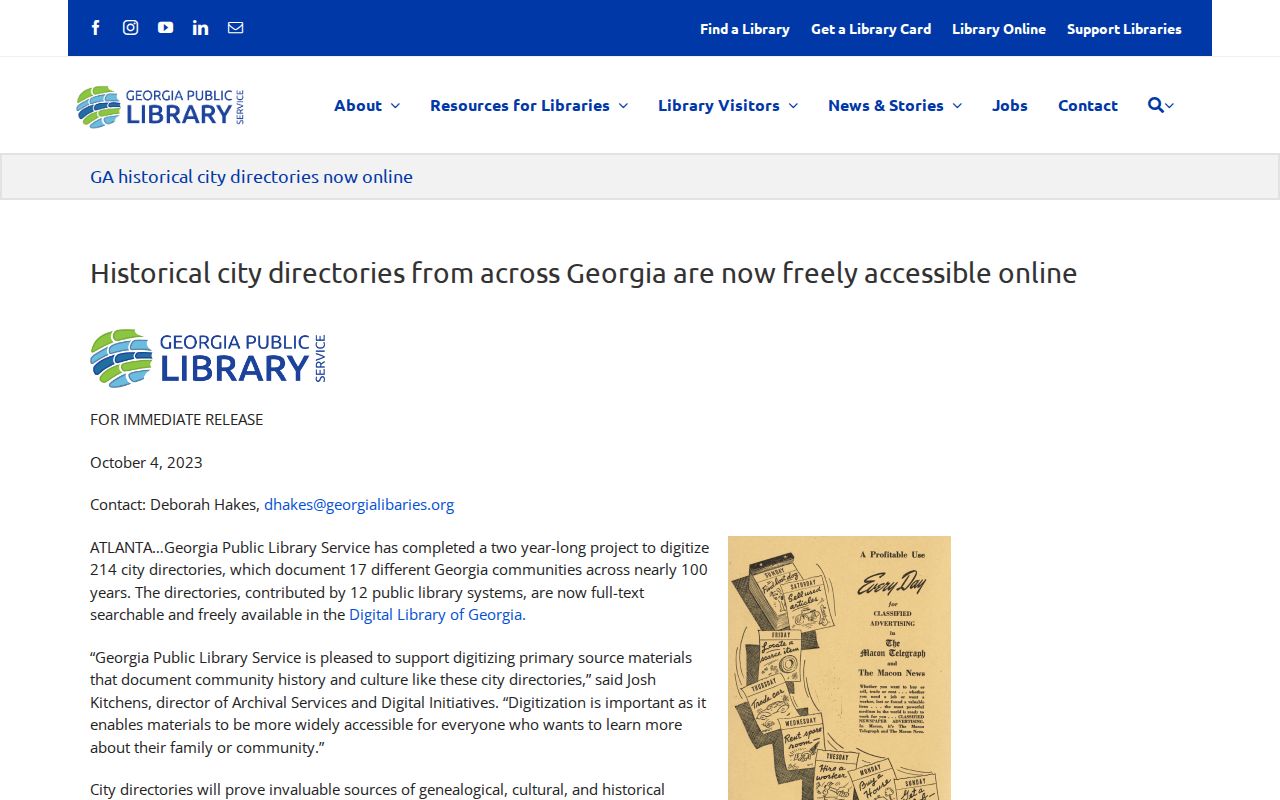
The named list stops a statewide project from being misread as a digitized Clayton County run.
Clayton County's Nearby Archives
Georgia Archives and the National Archives at Atlanta are both in Morrow, an unusual local advantage. Georgia Archives offers state and county originals or microfilm, city and county histories, census tools, genealogy databases, and city directories. NARA Atlanta holds federal regional series, including census and federal court or agency material where its catalog shows coverage.
Clayton State University Archives and Special Collections preserves university publications, photographs, and institutional history.
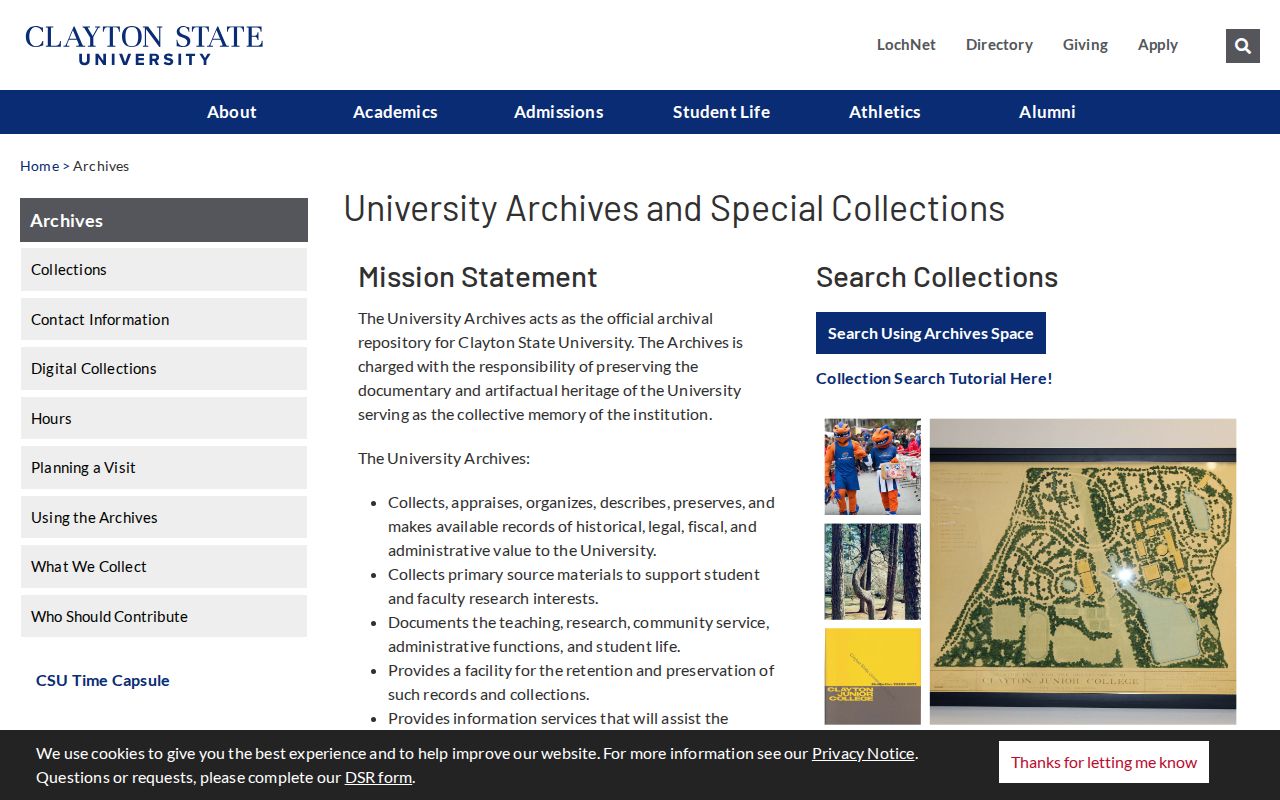
Those holdings can confirm a campus tie or local event even when they are not household directories.
Bring exact names, dates, and places. A city directory match is stronger when a census page, deed, photograph, or newspaper notice confirms the same person and address.
Clayton County Records Timeline
Clayton County was created on November 30, 1858 from Henry and Fayette Counties, and its first officers were commissioned in 1859. A person on the same land before formation may be indexed in a predecessor county. This county boundary, not a claimed records disaster, is the key early break.
| Date | Research consequence |
|---|---|
| Before 1858 | Search Henry or Fayette based on the parcel |
| 1860 | First public federal census for Clayton |
| 1890 | National census loss calls for deed, tax, newspaper, and probate bridges |
| 1960 | Verified Forest Park directory lead |
| 1968/1970 | Regional telephone leads for Ellenwood and Conley |
No authoritative courthouse-fire claim was found. The national loss of most 1890 schedules must not be recast as a Clayton courthouse loss.
Trace Clayton County Families
Use a city directory as a dated snapshot. First and last appearances can suggest a move, death, name change, or gap, but the book cannot pick among them alone. Pair each result with a source created for another purpose.
- Confirm the street spelling and number from a deed, parcel, or dated item.
- Search the alphabetical list for the person, spouse, initials, and surname variants.
- Check the criss-cross section and save the abbreviation key.
- Compare nearby editions with public census households from 1860 through 1950.
- When the person disappears, check newspapers, cemetery, death, and probate records.
The 72-year census rule leaves 1950 as the latest public population schedule; 1960 is scheduled for 2032. Directories help bridge the decade gaps. For a modern match, use the Clayton County resident lookup rather than treating an old entry as current.
For a rural address missing from a directory, search the road, subdivision, nearby institution, and postal exchange. Publisher boundaries may omit land now treated as Clayton County, so absence from one volume does not prove the household was absent.
When a directory name disappears near a reported death, use the Georgia DPH vital records office locator to identify the official local request desk.
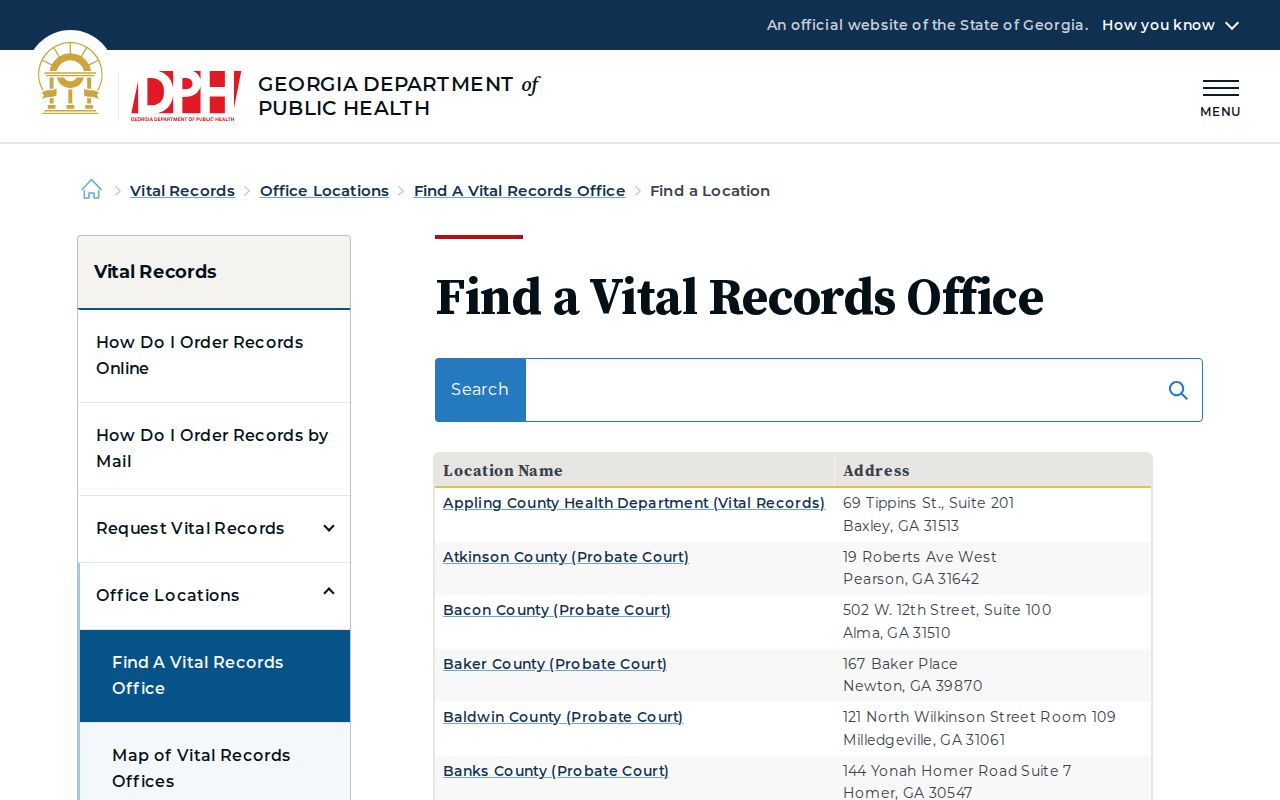
The locator connects a directory clue to the Clayton County service point, while certificate access still follows Georgia relationship and product rules.
Note: Record the title, publisher, year, page, and repository so another researcher can reproduce a directory finding.